

Voice Over
Voice-Over is a production technique where a voice—that is not part of the narrative —is used in a radio, television production, filmmaking, theatre, or other presentations. The voice-over is read from a script and may be spoken by someone who appears elsewhere in the production or by a specialist voice talent.In film, the filmmaker places the sound of a human voice (or voices) over images shown on the screen that may or may not be related to the words that are being spoken. Consequently, voice-overs are sometimes used to create ironic counterpoint.

3D Animations
most animations are made with computer-generated imagery (CGI). Computer animation can be very detailed 3D animation, while 2D computer animation can be and dynamic images, while computer animation only refers to moving images. Modern computer animation usually uses 3D computer graphics to generate a two-dimensional a list of 3D animation apps that have articles in Wikipedia. List of 2D animation software List of 3D computer graphics software List of 3D modeling software rendering 2D images. The resulting images may be stored for viewing later (possibly as an animation) or displayed in real time. Unlike 3D film and similar Traditional animation (or classical animation, cel animation, hand-drawn animation, 2D animation or just 2D) is an animation technique in which each frame
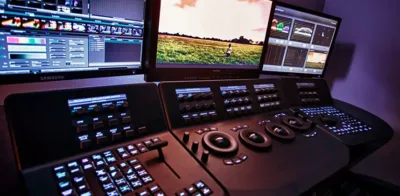
Color Corrections (D.I.)
Color correction is a process used in stage lighting, photography, television, cinematography, and other disciplines, which uses color gels, or filters, to alter the overall color of the light. Typically the light color is measured on a scale known as color temperature, as well as along a green–magenta axis orthogonal to the color temperature axis. Without color correction gels, a scene may have a mix of various colors. Applying color correction gels in front of light sources can alter the color of the various light sources to match. Mixed lighting can produce an undesirable aesthetic when displayed on a television or in a theatre. Conversely, gels may also be used to make a scene appear more natural by simulating the mix of color temperatures that occur naturally. This application is useful, especially where motivated lighting (lending the impression that it is diegetic) is the goal. Color gels may also be used to tint lights for artistic effect.
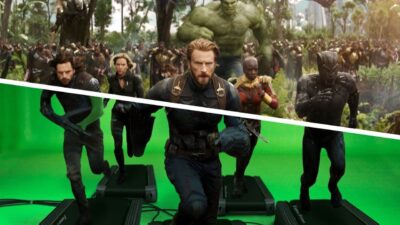
VFX & Graphics
Visual effects (abbreviated VFX) is the process by which imagery is created or manipulated outside the context of a live action shot in filmmaking. The integration of live action footage and CG elements to create realistic imagery is called VFX. VFX involves the integration of live action footage (special effects) and generated imagery (digital or optics, animals or creatures) which look realistic, but would be dangerous, expensive, impractical, time-consuming or impossible to capture on film. Visual effects using computer-generated imagery (CGI) have recently become accessible to the independent filmmaker with the introduction of affordable and relatively easy-to-use animation and compositing software.
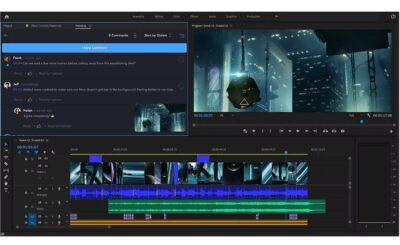
Editing
Kavithalaya Editing is the process of selecting and preparing writing, photography, visual, audible, and film media used to convey information. The editing process can involve correction, condensation, organization, and many other modifications performed with an intention of producing a correct, consistent, accurate and complete work. The editing process often begins with the author's idea for the work itself, continuing as a collaboration between the author and the editor as the work is created. Editing can involve creative skills, human relations and a precise set of methods.
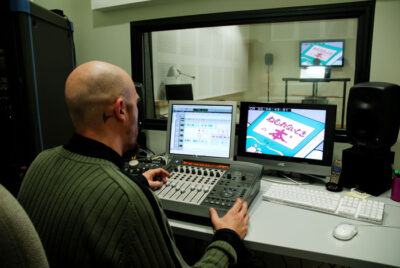
Dubbing
Dubbing services at Kavithalaya span across industries such as entertainment (movies, TV-series, animation and documentaries), e-learning, corporates, gaming, advertising, and many more. Quality is prime focus at Kavithalaya and our highly qualified and experienced team of production managers, dubbing artists and translators are committed to deliver high quality dubbing services at competitive rates while also preserving the authentic tone of the content.
Music Composing
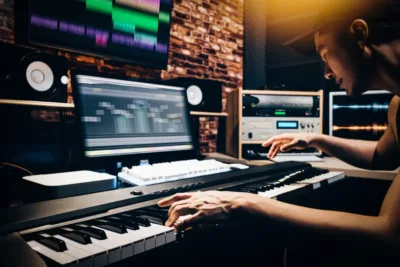
The task of adapting a composition for different musical ensembles is called arranging or orchestration, may be undertaken by the composer or separately by an arranger based on the composer's core composition. Based on such factors, composers, orchestrators, and arrangers must decide upon the instrumentation of the original work. Some common group settings include music for full orchestra (consisting of strings, woodwinds, brass, and percussion), concert band (which consists of larger sections and greater diversity of woodwind, brass, and percussion instruments than are usually found in the orchestra), or a chamber group (a small number of instruments, but at least two).
Recording, Mixing & Mastering (DTS)
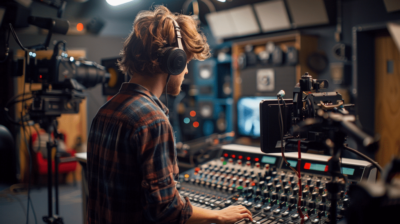
Stem-mixing is a method of mixing audio material based on creating groups of audio tracks and processing them separately prior to combining them into a Mastering, a form of audio post production, is the process of preparing and transferring recorded audio from a source containing the final mix to a data After mixing, a mastering engineer prepares the final product for production. Audio mixing may be performed on a mixing console or in a digital

Background Score
Kavithalaya internal auditors can advise management regarding the reporting of forward-looking operating measures to the Board, to help identify emerging risks; or internal auditors can evaluate and report on whether the board and other stakeholders can have reasonable assurance the organization's management team